
Many parents assume that class sizes are not something to worry about.
Having more students in a class may seem like an excellent way for your kid to make friends and have fun, but it is actually more complicated than that!
When it comes to preschool education, class size is not just about the number of children in a room; it’s about the level of engagement, learning, and the emotional well-being of every child.
A study on class sizes, using 47 years’ worth of data on early childhood programmes in the U.S., shows that small classes make for an ideal learning environment.
With a low teacher-student ratio, children are able to receive the attention, support, and guidance they need to flourish.
The environment in small classes, then, not only promotes academic growth but also nurtures social and emotional development in your child.
Not convinced yet? Read on to discover the 6 benefits of programmes with a small class and why you should enrol your child in one!
What Can Be Considered a Small Class Size?
In Singapore, the size of preschool classes is guided by the Ministry of Education (MOE) and the Early Childhood Development Agency (ECDA).
That said, there isn’t one official, fixed definition of what qualifies as a “small class”.
At MOE Kindergartens, each class typically has up to twenty children, which serves as a general benchmark for a standard class size in public preschool settings.
In childcare centres and private preschools regulated by ECDA, the teacher-child ratios vary by age group to ensure proper supervision and quality learning.
The general ratio of teachers to children is as follows:
- Infants → 1:5
- Playgroups → 1:8
- Nursery 1 → 1:12
- Nursery 2 → 1:15
- Kindergarten 1 → 1:20
- Kindergarten 2 → 1:25
Do note that these ratios are the minimum standards, meaning centres can operate with even smaller groups if they choose to!
The Benefits of Studying in Small Classes
If you choose to enrol your child in a class with a low teacher-student ratio, there are plenty of benefits to gain from it.
Let’s explore those 6 unique advantages!
1. Individual attention and personalised learning
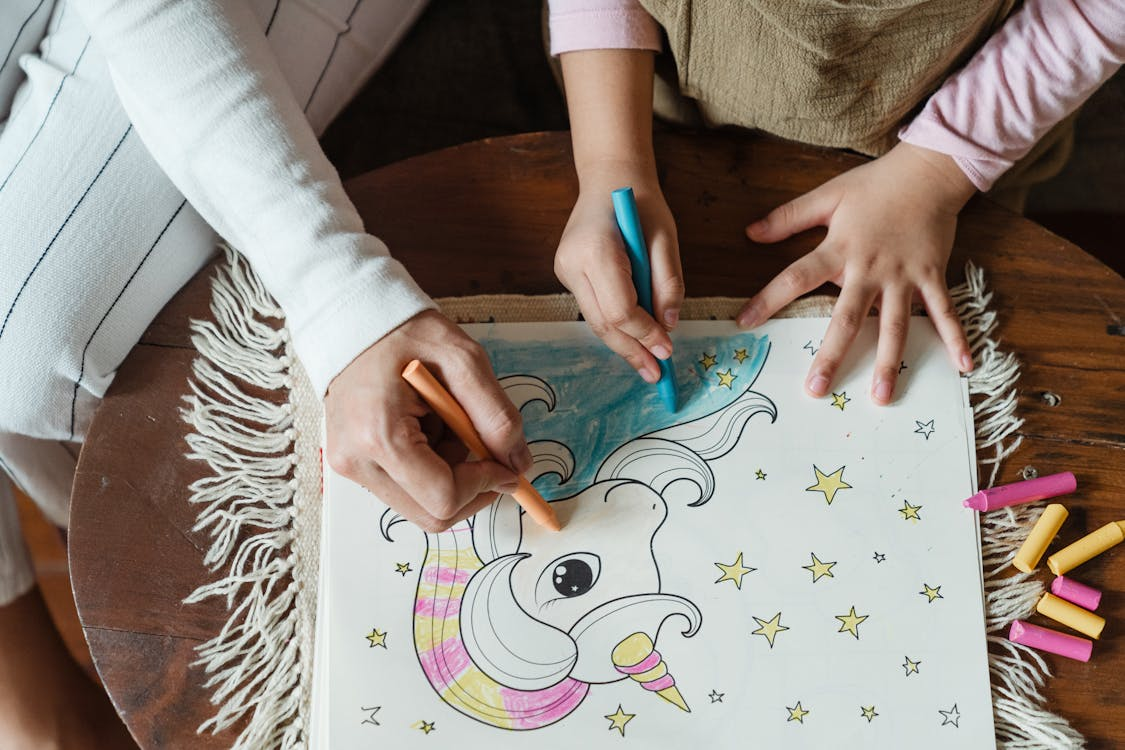
One of the most noticeable advantages of smaller classes is the increased opportunity for your child to receive one-on-one learning.
In a preschool classroom with fewer learners, teachers can pay closer attention to each child’s pace, interests, and unique learning style.
The fact of the matter is, every child develops at their own rhythm. Some may excel in language, while others might need more time to work with numbers.
Instead of applying a one-size-fits-all approach, educators can easily tailor their teaching methods to suit each student better when classes are small.
For example, if a child struggles with reading, the teacher can spend extra time reinforcing those skills through games or one-on-one sessions.
This kind of individualised support is often impossible in larger groups, where a teacher’s attention will be divided among many children.
Choosing a centre with small classrooms allows your child to reap the benefits of this individualised approach, which nurtures both academic growth and emotional well-being!
2. Meaningful connections in the classroom
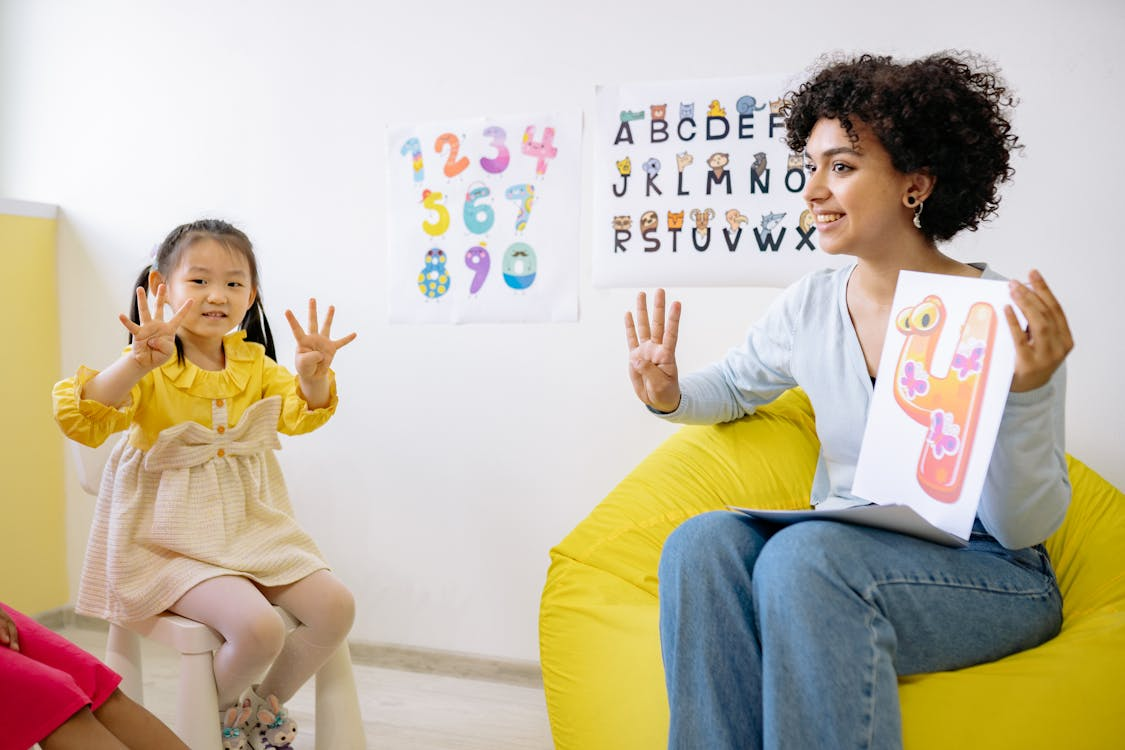
In a smaller class setting, teachers will have the chance to form genuine, meaningful relationships with each child!
When teachers know their learners well, they can understand their personalities, needs, and triggers.
This understanding allows them to guide each child more effectively and respond appropriately to their emotions or behaviours.
A strong bond between teachers and learners also promotes trust. When children feel comfortable and supported, they are more likely to:
- Take risks
- Ask questions
- Express themselves openly
This sense of safety is important for a nurturing learning environment, as it encourages curiosity and creativity.
In comparison, teachers in larger classrooms may struggle to divide their attention equally. Some quieter or more reserved children may feel overlooked, leading to lower levels of engagement.
Overall, smaller classes are recommended to ensure that your child receives the care and encouragement he deserves.
3. Increased student engagement and participation
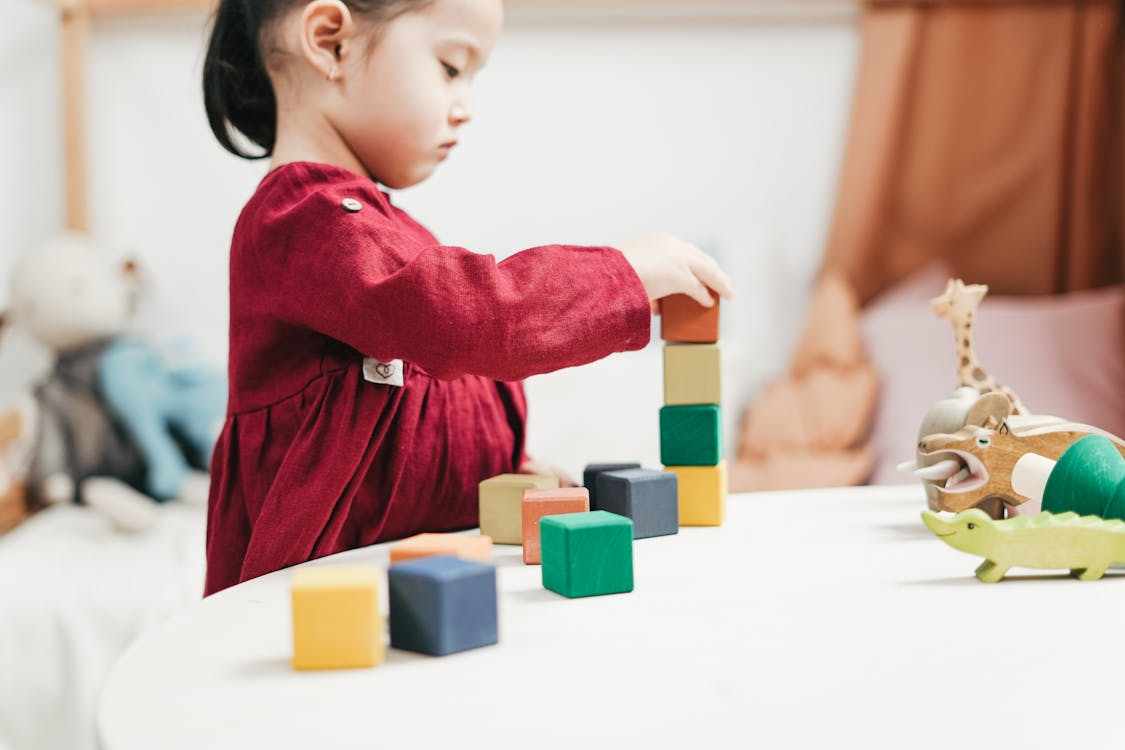
Student engagement plays a vital role in how effectively young children learn.
Preschoolers are naturally energetic and curious, so they often have trouble paying attention.
According to the statistics provided by Brain Balance, the average attention span of a child is expected to be as follows:
- 2 years old: 4 to 6 minutes
- 4 years old: 8 to 12 minutes
- 6 years old: 12 to 18 minutes
- 8 years old: 16 to 24 minutes
- 10 years old: 20 to 30 minutes
Of course, this is not always the rule. Some kids may be able to concentrate even more or less than the expected average.
Regardless of what the situation may be, smaller classes will undoubtedly make it easier for educators to maintain the attention and involvement of each child. Here is how!
Learners Can Become Engaged Through Fun, Tailored Activities
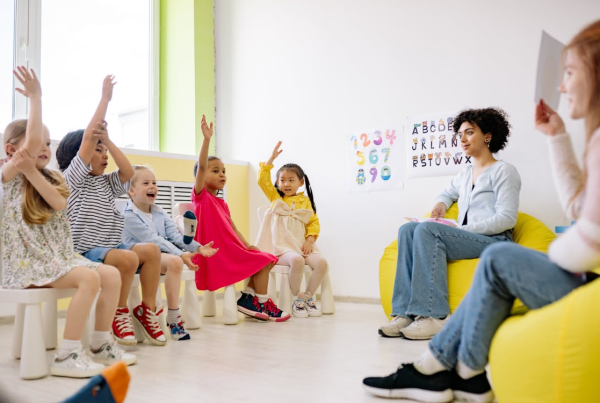
A significant benefit of having a small class is that it allows teachers to design more interactive activities effectively, encouraging children to become well-rounded learners.
Here are some activities that showcase the average kindergarten class at Wharton:
- Learn independence by folding clothes, setting the table, and preparing snacks
- Gain literacy by journaling, storytelling, and conversations in English and Chinese
- Develop the senses with rhythm activities, playing with colour tablets, and tactile exploration
With activities like these, they will not only increase participation but also enhance your child’s cognitive and motor skills.
Teachers Can Monitor Engagement and Participation Levels
Additionally, teachers of small class sizes can easily monitor the child’s emotions or behaviour to determine engagement levels.
If a child appears distracted or uninterested, the teacher can quickly intervene and adjust the activity. This sort of immediate response helps keep learning experiences fun and effective for everyone!
With the right preschool, you can expect your child to remain engaged while learning in classes.
4. Better behaviour management and classroom harmony
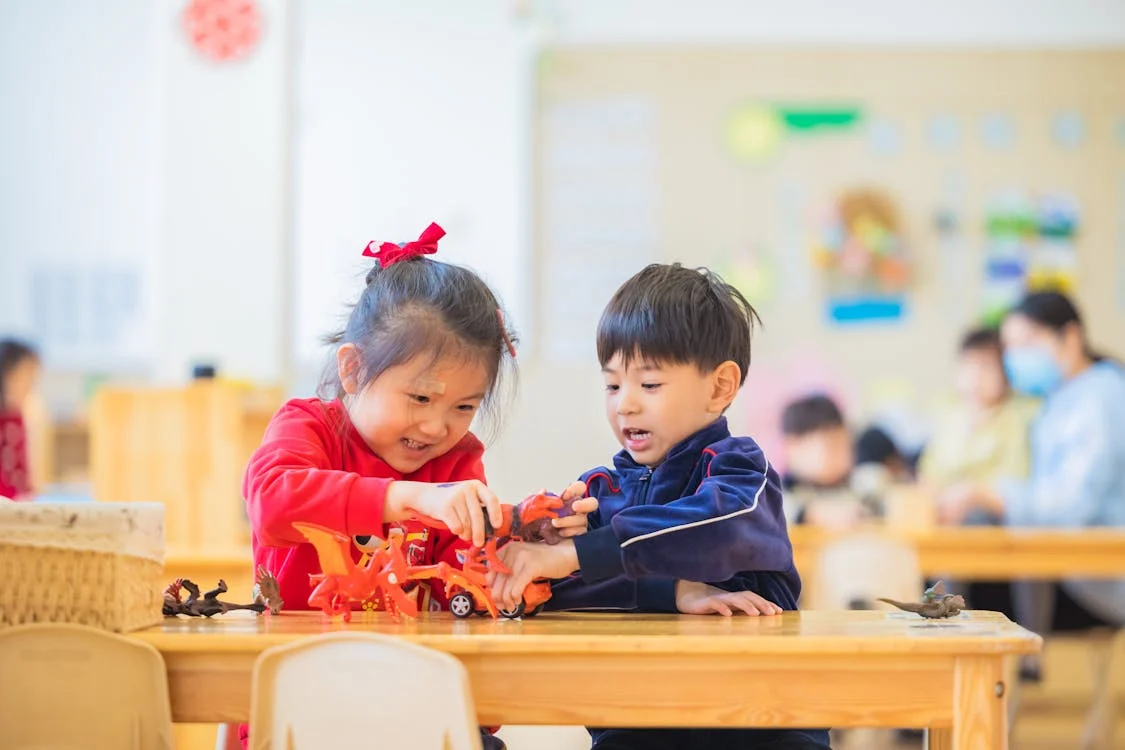
Behaviour management is another key area where smaller classes have a clear advantage.
Since preschool-aged children are still developing emotional regulation and social skills, the occasional conflicts or outbursts in the classroom are to be expected.
However, these situations can quickly escalate in a crowded classroom, making it harder for teachers to maintain harmony.
This is where smaller classes can be especially advantageous.
In a calmer, more controlled environment, teachers can establish routines more effectively, monitor interactions closely, and address behavioural issues early.
Your child will also be able to absorb core social values better, such as:
- Sharing
- Respect
- Cooperation
- Empathy
When children feel seen and respected, they are less likely to act out. The sense of belonging can then promote positive peer relationships and reduce competition.
With small classrooms, your child can become a part of a supportive community where he can learn from his peers.
5. Stronger academic foundations for future learning

The benefits of smaller classes can continue far beyond the preschool years.
Take Project STAR (Student Teacher Achievement Ratio), for example, which studied the impact of small classes on the academic achievement of more than 11,000 students in the U.S..
This controlled trial demonstrates how students who start their education in smaller class settings often perform better in later grades.
Due to early exposure to a focused and engaging learning environment, children are able to develop strong academic habits.
Moreover, smaller class sizes often mean that teachers can introduce more creative and experiential learning opportunities.
Whether it’s through outdoor play, art projects, or sensory exploration, children are more likely to engage deeply with lessons that spark their imagination.
You can expect your child to gain these experiences with small classes at Wharton, where we aim to provide a foundation for lifelong curiosity, resilience, and academic excellence.
Relevantly, our article on Why Early Childhood Education Matters underscores the importance of investing in preschool education.
6. A supportive community for teachers and parents

While small classes with fewer children are valuable for young learners, they can also benefit teachers and parents.
Educators in small classrooms experience less stress and burnout because they can manage their workload more effectively.
They will be able to dedicate more time and energy to planning engaging lessons, observing progress, and providing meaningful feedback.
For parents, smaller classes mean better communication with teachers. Progress updates, concerns, and achievements can be discussed in even greater detail.
All in all, this partnership between teachers and parents will ultimately improve the child’s quality of education.
When teachers and parents work closely together, they can address learning challenges early.
This will result in a strengthened support system around each child, which helps ensure consistency between home and school.
Whether it’s a speech delay, social difficulty, or academic struggle, having your child learn in smaller classes allows for timely interventions and collaborative problem-solving.
Take Advantage of Small Class Sizes at Wharton Preschool!
Are you currently looking for the perfect preschool with a low teacher-student ratio? Look no further, because Wharton Preschool is the right fit for you!
At Wharton, we firmly believe that each child is unique, and we embrace that by providing the tools and space he needs to thrive.
Here are the programmes that we provide:
- Infant Care (2 – 17 months)
- Playgroup and Nursery (18 months – 4 years)
- Kindergarten (5 – 6 years)
- Enrichment Classes
What makes many parents across Singapore trust us is our unique and exclusive teaching framework.
Blending Montessori principles with our very own iLearn Method, we aim to encourage curiosity, independent exploration, and creative growth.
Your child will not simply learn with us. Instead, he will be encouraged to take ownership of his journey in education, develop resilience, and engage meaningfully with the broader community.
Find us in the neighborhoods closest to you!
- 📍 Wharton Preschool at Sengkang (Serangoon North)
- 📍 Wharton Preschool at Upper East Coast
- 📍 Wharton Preschool at Sembawang
Ready to begin your child’s learning journey? Book a school tour today and see how we can provide an enriching start to his academic life.