
From the moment your child begins to compare sizes or notice patterns in their surroundings, he is already engaging with the foundations of mathematics.
Numeracy is more than just learning to count or recognise numbers; it lays the foundation for children to succeed in life.
Not only will your child do well in math classes, he will also develop important life skills such as problem-solving, logical thinking, and reasoning.
When children build strong numeracy skills early, they additionally develop confidence in tackling everyday challenges, from measuring ingredients to recognising patterns and understanding time.
In early childhood education, especially within Montessori-inspired environments, learning maths is made enjoyable, sensory-rich, and meaningful through play and real-life experiences.
Read on to discover 10 fun activities your child can learn math and numeracy skills using his senses!
Understanding Numeracy in Early Childhood
In a nutshell, numeracy refers to the ability to understand and apply basic mathematical concepts in daily life.
It includes skills such as:
- Counting
- Recognising numbers
- Understanding quantity
- Comparing sizes
- Recognising shapes
- Identifying patterns
For preschoolers, developing numeracy skills doesn’t mean just sitting still and memorising equations.
Instead, it’s about exploring the world around them, using their senses to make sense of basic mathematical concepts, and discovering how numbers connect to real-world experiences.
Math skills are best nurtured through hands-on exploration and discovery.
So, when a child manipulates objects, sorts by colour or size, or pours water between containers, they are already engaging in learning that strengthens both their understanding and curiosity!
The Montessori Approach: Learning Through Experience
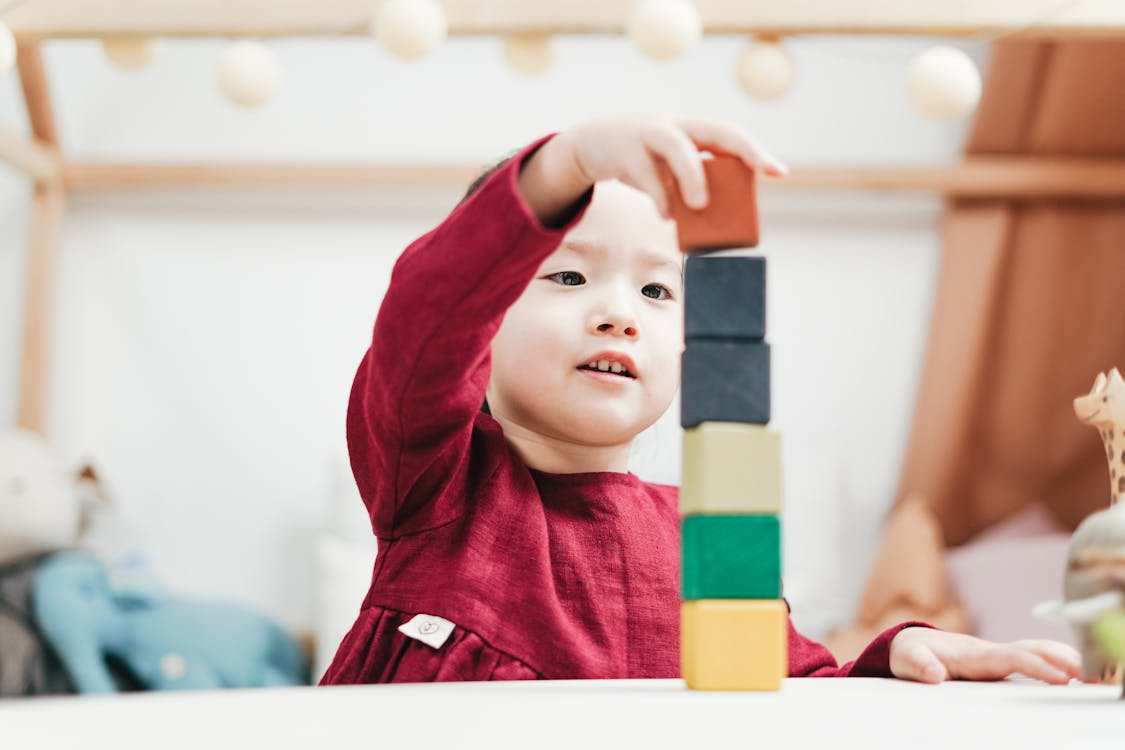
The Montessori method promotes learning through tactile, sensory, and practical experiences rather than rote memorisation.
It recognises that children absorb information best when they are free to move, explore, and engage multiple senses.
As such, math becomes meaningful when children can touch, see, and feel abstract ideas in tangible ways.
Instead of telling a child that five is more than three, Montessori environments allow them to see and feel this difference.
Educators will usually encourage numeracy-building activities such as:
- Arrange beads in lines
- Stack blocks in towers
- Count natural objects such as shells or stones.
Through repetition and exploration, these concrete experiences build a deep understanding of numerical relationships before moving on to abstract symbols and equations.
Practical life activities also support numeracy by connecting math to everyday routines.
Simple tasks such as pouring juice, folding napkins, or setting the table provide opportunities to learn about measurement, quantity, sequencing, and order.
These active learning experiences make math a natural part of daily living.
As a preschool that specialises in Montessori approaches, Wharton Preschool is adept at delivering a holistic learning experience.
Fun, Multisensory Ways for Preschoolers to Learn Math
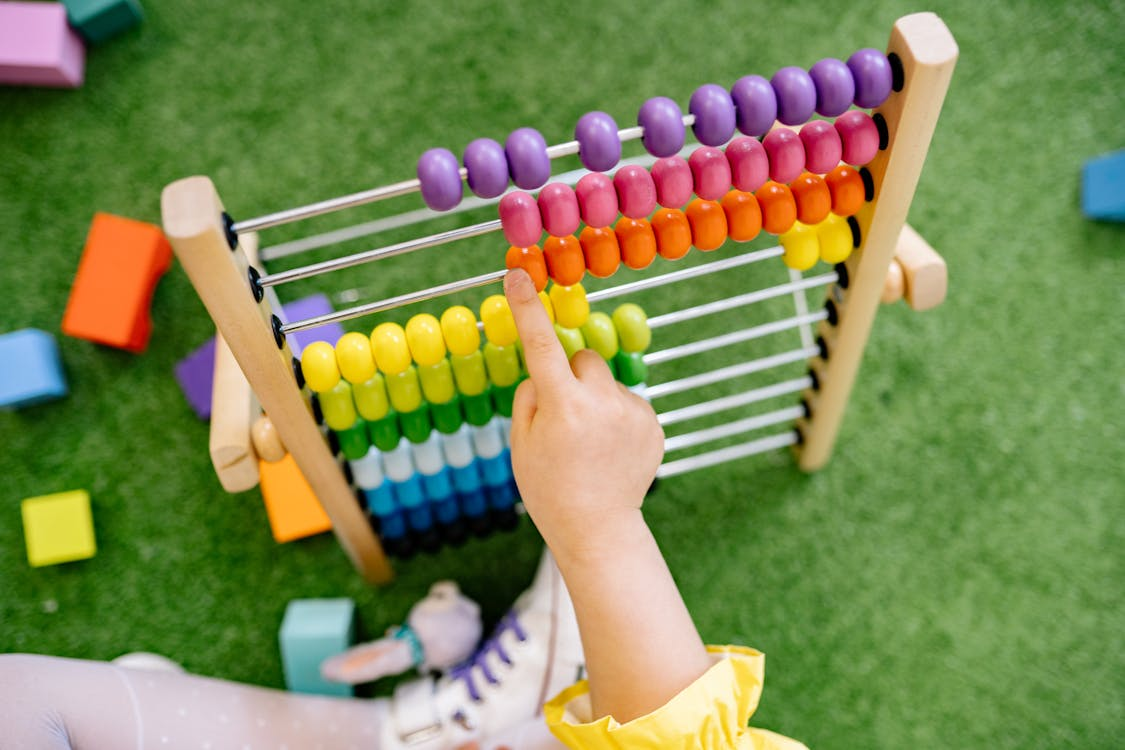
Here are some engaging, multisensory, and practical activities that can help young learners strengthen their numeracy skills while having fun!
1. Counting with everyday objects
Children love to touch and manipulate objects, and counting provides a perfect opportunity for hands-on exploration.
You can invite your child to count spoons during snack time, arrange buttons in groups, or collect pebbles from the playground.
Sorting and counting familiar objects make the concept of quantity more meaningful.
For example, lining up toy cars and counting them aloud encourages number recognition and sequencing while reinforcing the idea that each number corresponds to a single object!
2. Sandpaper numbers and number tracing
A hallmark of Montessori maths materials, sandpaper numbers allow children to trace the shape of each numeral using their fingers!
This activity connects the tactile sense with visual recognition and motor memory.
The physical motion of tracing helps preschoolers internalise the shape and meaning of each number, creating a strong foundation for later writing and arithmetic.
You can follow this up with tracing numbers in salt trays or with chalk outdoors to maintain a sensory-rich learning dynamic.
3. Number matching with beads or cards
Using coloured beads or cards with numerals, children can match quantities to symbols.
For instance, you can guide your child to match five beads next to the card that shows the number “5”.
This concretely introduces abstract mathematical symbols, bridging the gap between seeing numbers and understanding their value.
4. Cooking and measuring activities
Did you know that cooking is one of the most practical and enjoyable ways to teach math?
Measuring flour, counting cups of water, or dividing fruit into equal parts all involve mathematical concepts.
These everyday activities develop an intuitive sense of fractions, measurement, and estimation.
For example, when a child pours ingredients into a measuring cup, they learn about volume, comparison, and precision.
These are all essential math skills that will translate into effective problem-solving.
5. Shape and pattern recognition games
Preschoolers are able to explore geometry by finding and naming shapes in their environment.
Blocks, puzzles, and craft materials can be used to create patterns and recognise differences between circles, squares, and triangles.
Additionally, playing with building towers or mosaics introduces symmetry, balance, and spatial reasoning, all while promoting creativity and fine motor control.
You may also extend this activity into nature walks, where your child can collect leaves or stones of different shapes and sizes for sorting or pattern creation.
Through repetition and exploration, children naturally begin to understand relationships between shapes, patterns, and order.
6. Movement and counting games
What’s great about maths is that children can also learn it through movement.
Many games allow children to combine physical activity with number sequencing, which includes:
- Hopscotch
- Counting jumps on a skipping rope
- Stepping along numbered tiles
Active learning strengthens coordination while linking numbers to physical experiences, helping children remember concepts more effectively.
Overall, this approach also helps to build concentration and body awareness.
When children jump three times or take five steps, they are not only practising counting but also connecting numbers to actions—a key element of learning in early childhood education.
What’s more, movement activities help to improve your child’s gross motor skills, which you can learn more about with our article on Motor Skills Development!
7. Sorting and classifying objects
Sorting by colour, shape, or size teaches children to identify similarities and differences, which are critical components of logical thinking.
Activities such as sorting beads, buttons, or toy animals help preschoolers organise information and understand grouping.
On top of exposure to categorisation, it also introduces them to the concept of sets and comparisons.
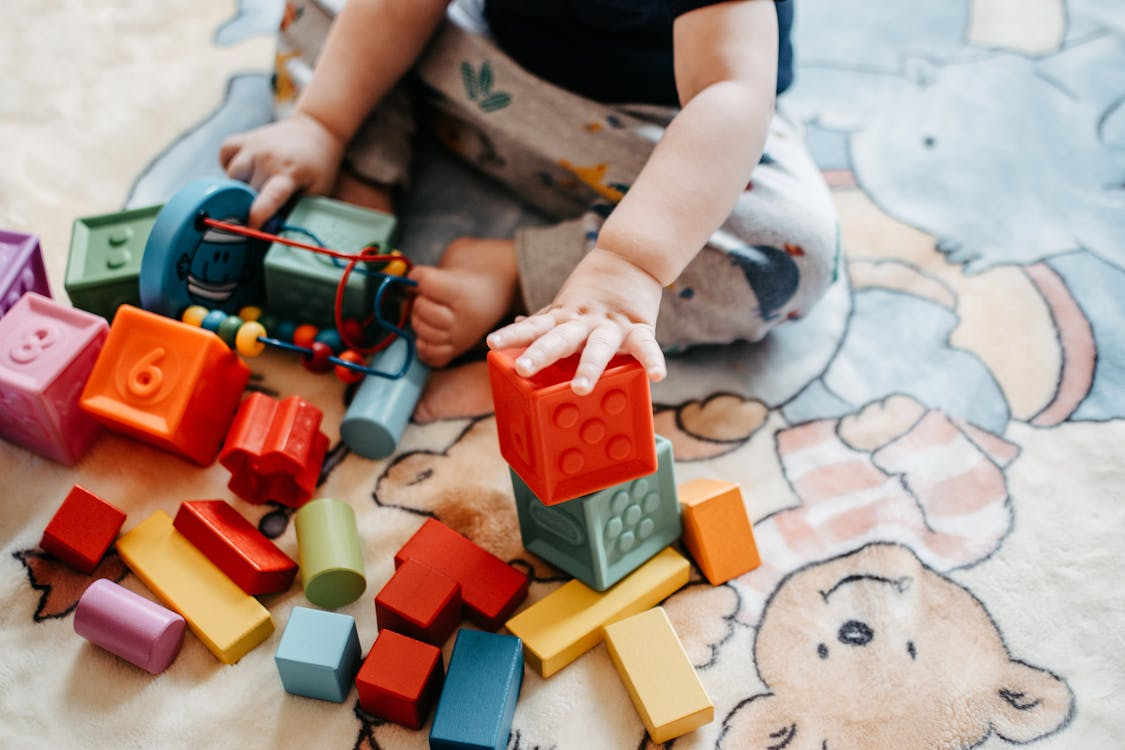
8. Building and construction play
When children build towers, bridges, or houses using blocks or recycled materials, they are exploring measurement, symmetry, balance, and estimation.
These play experiences encourage problem-solving and critical thinking while reinforcing spatial and numerical awareness.
You can also engage by asking questions such as, “How many blocks do you need to make it taller?” or “What shape will make the base stronger?” to prompt further thinking and learning.
9. Calendar and time activities
Introducing the concept of time through daily routines is another practical way to build numeracy!
Using a calendar to mark days or count down to birthdays helps children understand sequencing, prediction, and measurement of time.
These activities teach order and regularity while fostering anticipation and pattern recognition.
10. Outdoor number hunts and nature counting
Taking learning outdoors makes math exciting and active for your young one.
You can organise a number hunt where children look for items in quantities—two leaves, three sticks, or five flowers.
This encourages counting, observation, and comparison skills. It also nurtures curiosity and a love for nature while turning abstract math concepts into concrete discoveries.
Why Multisensory Learning Matters
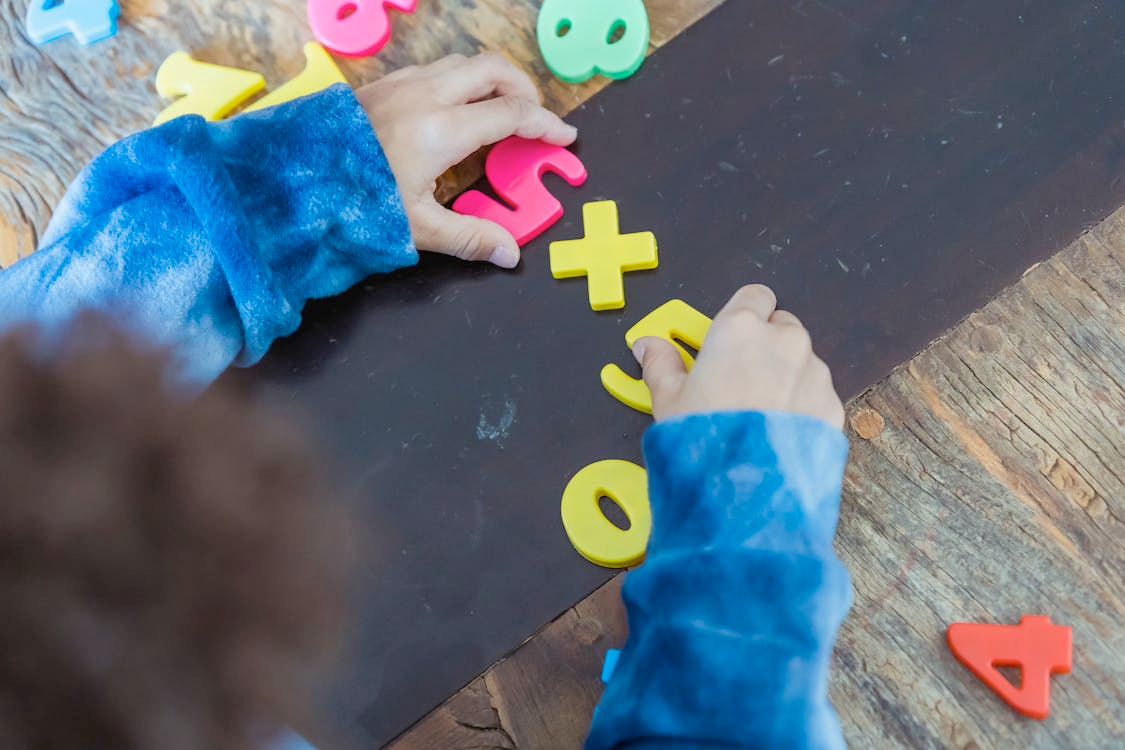
Multisensory learning engages more than one sense at a time—sight, touch, sound, and movement—which enhances memory and understanding.
When children can feel, see, and manipulate materials, their brains create stronger neural connections.
This approach benefits all learners, particularly young children who thrive on exploration and physical engagement.
In numeracy learning, multisensory methods make abstract ideas more accessible. For instance:
- Feeling the rough surface of a sandpaper number while hearing its name reinforces both tactile and auditory memory
- Pouring water between measuring cups connects physical movement with visual change
These experiences anchor learning in a real-world context and meaning, while further enriching your child’s early learning experiences.
Gain Numeracy Skills While Having Fun at Wharton Preschool!
If you are in need of expert educators who can develop your child’s numeracy skills, look no further than Wharton Preschool!
From optional preschool classes to programmes for infants, we are equipped to help your child thrive throughout their early education journey.
Here are the services that we offer:
- Infant Care (2-17 months)
- Playgroup and Nursery (18 months – 4 years)
- Kindergarten (5 – 6 years)
- Enrichment Classes
At Wharton Preschool, we provide unique yet effective approaches to help your child grasp numeracy concepts.
Using our exclusive iLearn Method, which incorporates Montessori techniques with an ECDA-endorsed iTeach framework, your child will learn within a structured and experiential environment.
Our classes are also small in number, which means that all our teachers will be able to closely monitor and guide each learner on campus, to address any worries you may have about your child falling behind.
Above all, Wharton is more than just a place dedicated to early childhood education; we actively seek to provide the skills and experiences needed for preschoolers to thrive beyond the classroom.
We believe that each child is unique, and we honour that individuality by encouraging him to take ownership of his learning journey.
You can find us at these convenient locations across Singapore:
- 📍 Wharton Preschool at Sengkang (Serangoon North)
- 📍 Wharton Preschool at Upper East Coast
- 📍 Wharton Preschool at Sembawang
Eager to give your child a holistic educational experience? Book a school tour with us today and see how we can help him grow into becoming a successful learner!